Every attuned designer understands that the moment a trend becomes desirable, it’s already on its way out. We’ve seen it time and time again in both interior design and fashion. Once something is officially “in,” its expiration date is already stamped. By the time you buy into it, the cycle has already moved on.
Trends thrive on human instinct. It’s the pull toward social acceptance, validation, and the comfort of belonging. But they also feed the far less appealing: overconsumption. Trends are bad not just for your wallet, but for your space, your mindset and frankly, the environment.
But that’s a conversation for another day…
In this post, I’ll be sharing the trends I can’t stand at the moment and why I don’t like them, but more importantly, why they don’t work. First, let’s look at what the data has to say about trends.
The real data on trendy design:
I grew up in a time when trends didn’t come and go in a matter of weeks, they lingered for a good long while. Fashion, hairstyles, even entire interiors held their ground for years and sometimes decades. People moved a little slower and their environments reflected that. There was a sense of continuity.
We still experience the same phenomenon today, just moving at a pace that feels borderline aggressive. Trends don’t evolve anymore, they cycle out before they’ve even had time to settle!
Though, plenty of trends need to die a little faster in my opinion…
Don’t even get me started on how often I’ve seen that painfully overused “Live, Laugh, Love” either framed, on a pillow or worse… those shiny vinyl letters permanently committed to a bathroom wall. (Why are we laughing in the bathroom? I have questions.)
Designers have always known that trends date quickly. But now, that timeline has been completely compressed by social media. Everything is instantly visible, instantly desirable and just as quickly, instantly overdone. Everyone jumps on the same wave, and before it even crests, it collapses into the next thing.
Here’s the truth: trends aren’t designed to last—they’re designed to peak.
According to McKinsey & Company, fashion cycles have accelerated dramatically, with microtrends lasting only a few months compared to the traditional seasonal rhythm. Data from Edited shows that over half of new fashion items are discounted within weeks of release, which tells you everything you need to know about how quickly demand drops off. And research highlighted by Harvard Business Review points to constant content exposure as a driver of consumer fatigue and how people simply burn out faster.
Interior design used to move at a slower, more deliberate pace. But platforms like Pinterest and Instagram have pulled it into the same cycle. Homes are now treated like content and as a result, trends in interiors are turning over far more quickly than they did even 15 or 20 years ago.
1. Dopamine Decor
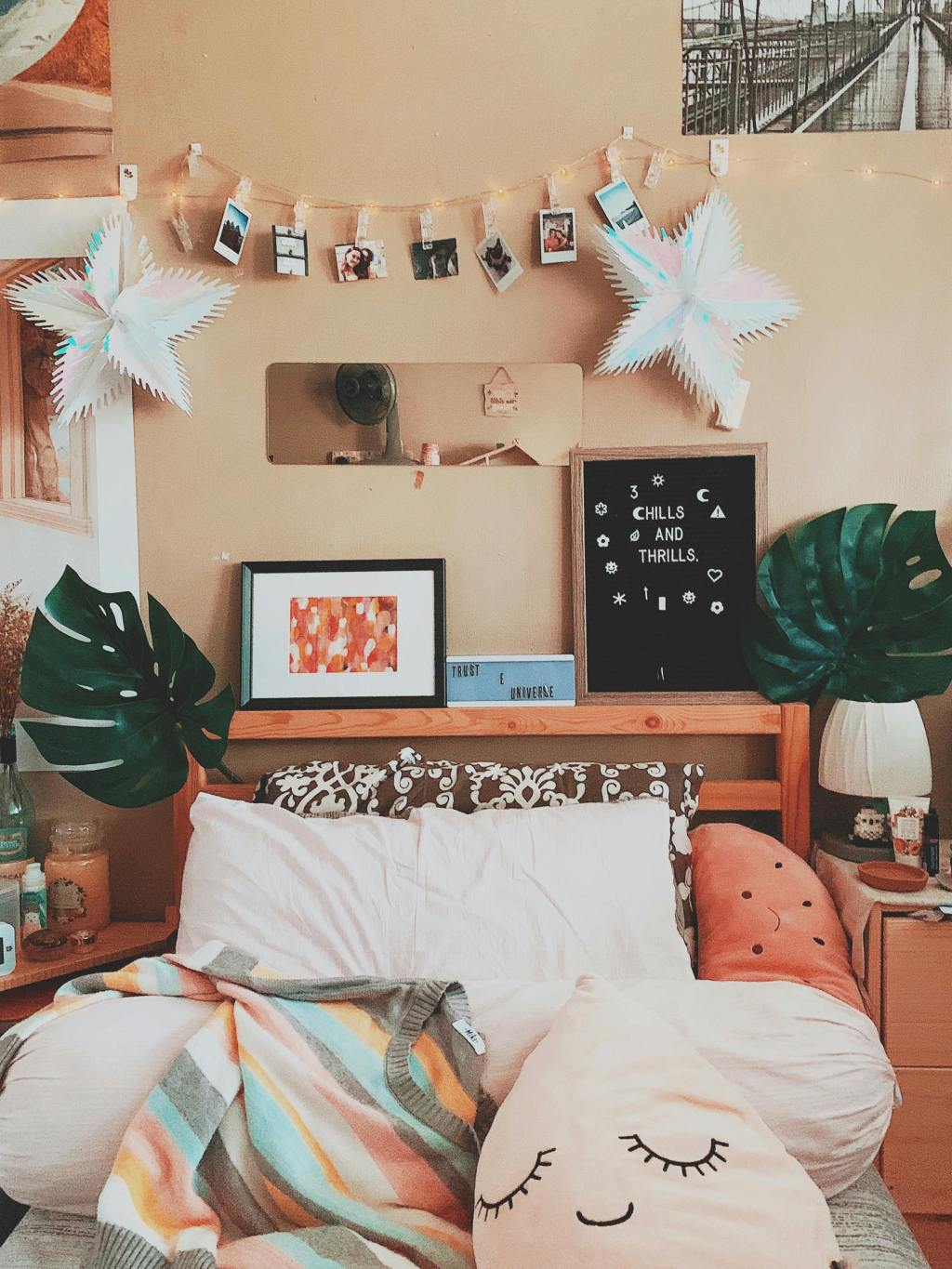
Eeesh. I have opinions. Many opinions about this type of maximalism and none of the opinions are positive.
I’ve mentioned in a previous post entitled Why Your Space Makes You Feel Anxious, how maximalism design, which ultimately ‘dopamine decor’ falls into categorically, feeds anxiety and feelings of overwhelm subconsciously. And I’ve also vocalized my frustrations with the lack of basic understanding in both designers and individuals why this is imperative to creating an environment that can be truly livable for the long-term.
Dopamine core and decor have existed for a while, but in the aftermath of the pandemic lockdowns it became a reactionary trend when people began to gravitate toward calmer, toned-down spaces. We saw more cream, beige and soft hues to soothe the anxious uncertainties that filled us during a period of time when we were all stuck at home. Instinctively, our minds and our bodies recognized that when our environments feel chaotic and overwhelming, it’s harder to focus and harder to relax. Mind you, many people began working from home and kids were also being kept at home for schooling.
But as those restrictions lifted, people swung in the opposite direction with bold, clashing colors, quirky and ‘ironic’ decor – everything was highly expressive and excessive. And of course, social media—especially platforms like TikTok and Pinterest have poured gasoline directly on it. Seemingly overnight, everyone was into these hyper-colorful, personality-forward spaces designed to stand out on a feed, but lacked any real direction to make sense or to be livable in offline.
“I always look at a home as a sanctuary. I believe that individual rooms can become a haven on their own when they are designed to comfort and hold us. Not press against us and create unnecessary stress or heightened emotion.”
This design trend is highly aligned with specific demographics, particularly those who are most responsive to rapid visual stimulation, identity-driven consumption and social validation loops. And while shifts in social and human psychology during an event like this can push trends, they’re greatly influenced when companies feed on these demographics for profit, knowing that the trend is already dead.
2. “Core” Aesthetics
This includes, but is certainly not limited to cottagecore, kawaiicore, barbiecore, goblincore and whatever-core-of-the-week is currently making its rounds. And yes, apparently “cluttercore” is a thing… which feels less like a concept and more like an accidental admission. These “core” aesthetics read as ultra-maximized, curated clutter with a shallow branding strategy.
It shouldn’t be surprising if you’ve been paying attention, but “core” spaces are not built on design principles they’re built on identity packaging. And the data around trend cycles, consumer behavior and environmental psychology makes that obvious.
I’ve said it before and I’ll say it again: I genuinely loathe these trends with the entirety of my being. They’re tacky, excessive and worst of all… they are predictable. There’s nothing unique about them, despite being marketed as individual or unique to someone’s personality. They work against the very idea of personal expression which actually makes core design boring.
There’s nothing inherently inspirational about a space that’s been reduced to a theme and replicated at scale. Sorry, not sorry. This isn’t design. It’s a category. A box. You didn’t design a space, you assigned it a label.
3. Faux “Luxury” Finishes
Listen, I fully believe in faking it until you make it, but some things deserve a little more honesty than that. And one of the things I absolutely cannot stand in interior design spaces right now is the return of faux finishes.
They’ve come back with a vengeance. I remember the era of that awful peel-and-stick paper slapped onto bathroom vanities and kitchen countertops in the ’90s. And somehow, we’re right back there again. Can we please let that stay where it belongs? In the past! Ugh!
I’m going to say this as plainly as possible: These “solutions” rarely hold up. Not visually, not physically and definitely not over time. The issue isn’t just that they’re imitating something else, it’s that they prioritize appearance over material integrity. Real materials have weight, variation and you can tell that it’s… well, real. Faux finishes, on the other hand, are designed to read a certain way at a glance, usually in a photo, but they fall apart the second you actually start to live with it.
Peel-and-stick “marble” countertops, faux limewash paint jobs, fluted wall panels made of thin MDF or plastic, high-gloss “gold” hardware that leans more yellow and even vinyl wood flooring is trying very hard to pass as something it’s not. And sure, in a filtered, well-lit photo, some of it can look kinda convincing for a moment. But in real life? The texture is off. The sheen is wrong. The pattern repeats too perfectly. It lacks depth, and your eye picks up on that whether you realize it consciously or not.
And again, the biggest issue is that these finishes don’t age—they deteriorate. Real materials develop character over time while faux ones tend to break down the moment you breathe on it.
Edges peel, surfaces scratch in a way that exposes the illusion, finishes discolor, and suddenly that “marble” looks like exactly what it is. Temporary. Disposable. And once that illusion is gone, it’s very hard to recover from without replacing the entire piece.
If you’re working within a budget, the answer is not to imitate luxury, it’s to work honestly with what you can afford. Choose materials that make sense for your space, even if they’re simple. A well-finished wood, a matte ceramic, a solid neutral paint done well will always read more elevated than something pretending to be what it isn’t. Listen, you don’t need to fake it to make it look good. In fact, that’s usually what’s making it look worse.
Conclusion
At the end of the day, trends will come and go. It’ll be louder, faster and more aggressively than ever, but good design has never relied on them. You don’t need to chase every aesthetic, label your space, or imitate materials to create something that feels worthy. In fact, that’s usually what gets in the way. The goal isn’t to keep up, it’s to create something that holds up. And that will always outlast whatever is trending this week.



 Rika Rè Interiors | Rè-Style Blog
Leave a comment